For years, I kept seeing the same patients.
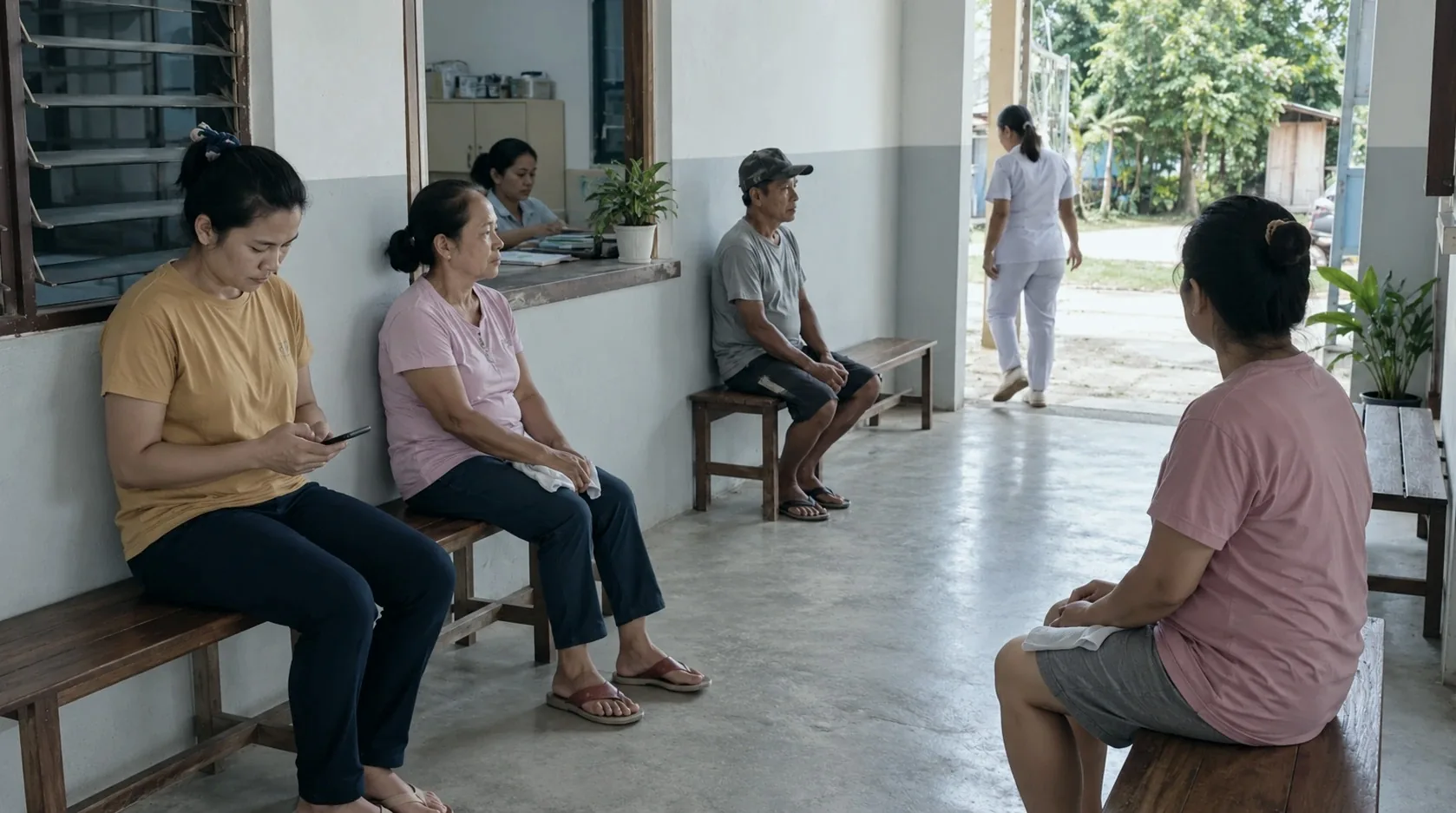
Pregnant mothers who had traveled through the night just to check on their baby's well-being. Elderly patients enduring hours of travel over rough roads. Parents carrying infants and young children from island municipalities and mountain barangays because ultrasound services simply weren't available closer to home.
Some arrived by boat. Others by bus, motorcycle, or on foot before they could even reach transportation. Many arrived exhausted. Some slept wherever they could while waiting for the clinic to open.
And sometimes, after all that, they would arrive only to find that the schedule had changed or the doctor wasn't available that day.
All of that effort...
...for an ultrasound examination that often took only fifteen or twenty minutes?
And after the examination, they still had to make the entire journey back home.
At first, I accepted this as part of the reality of provincial practice.
But over time, the cases kept coming.
Week after week.
Month after month.
Different patients.
The same journey.
The same struggle.
And some were harder to forget.
Patients whose conditions might have been recognized earlier if diagnostic services had been more accessible.
Cases where the disease had already progressed by the time they finally reached care.
Eventually, I stopped asking why they kept traveling.
I started asking a different question:
Why should anyone have to travel this far for something as fundamental as an ultrasound examination?
The answer seemed straightforward.
Instead of asking patients to travel to healthcare...
Why not bring healthcare closer to patients?
I began dreaming about building ultrasound clinics in underserved communities—places where patients could receive quality diagnostic care without spending an entire day, or sometimes an entire night, just to reach a city.
But as I started planning those clinics, I discovered something I hadn't expected.
The hardest part wasn't simply placing an ultrasound machine in another location.
It wasn't just finding a space or opening another clinic.
The hardest part was finding healthcare professionals with the training, competence, and confidence to consistently perform high-quality ultrasound examinations.
That realization changed everything.
As I looked deeper, I realized this was not just a clinic problem.
It reflected a much larger gap in how ultrasound education and practice were being supported in real-world settings.
Many healthcare professionals wanted to improve their ultrasound skills, but access to structured, practical training was not always easy—especially for those already working in busy clinical environments or practicing far from major training centers.
Workshops and conferences remain valuable. They introduce concepts, expose learners to experts, and help keep professionals updated.
But ultrasound skill does not develop from exposure alone.
It grows through structure, repetition, image review, feedback, and continuous practice.
I also realized that routine ultrasound practice often varied from one institution to another.
Different hospitals had different workflows.
Different practitioners learned different techniques.
Documentation was not always consistent.
Everyone was trying to provide the best care they could, but there was no single practical framework widely used across everyday local practice for how routine ultrasound examinations should be systematically performed, documented, and taught.
That realization changed the way I approached education.
Instead of asking, “What should I teach?”
I started asking:
“What should a healthcare professional be able to perform consistently before an ultrasound examination can truly support clinical decision-making?”
That question led me back to international standards and established references.
I studied their principles—not to copy another country’s practice exactly, but to understand the clinical logic behind them.
Then I asked the harder question:
How do we adapt high-quality standards into training workflows and learning materials that remain practical, realistic, and useful in our own healthcare setting?
That became one of the foundations of SonoMedica:
practical ultrasound education grounded in international standards and adapted to real-world local practice.
At that point, I realized something that completely changed my original plan.
Before I could even build one ultrasound clinic...
I first had to help build the professionals who would one day lead them.