General Ultrasound Foundations
Next batchWhen ultrasound can support the next clinical decision, do you know where to start?
A 6-week course that gives healthcare professionals a structured way to approach ultrasound examinations: landmarks first, then labels, then recognizing common abnormal patterns and knowing when to escalate. Developed and taught by a radiologist, built around your working week.
Ask about fees, schedule and whether the course fits your practice.
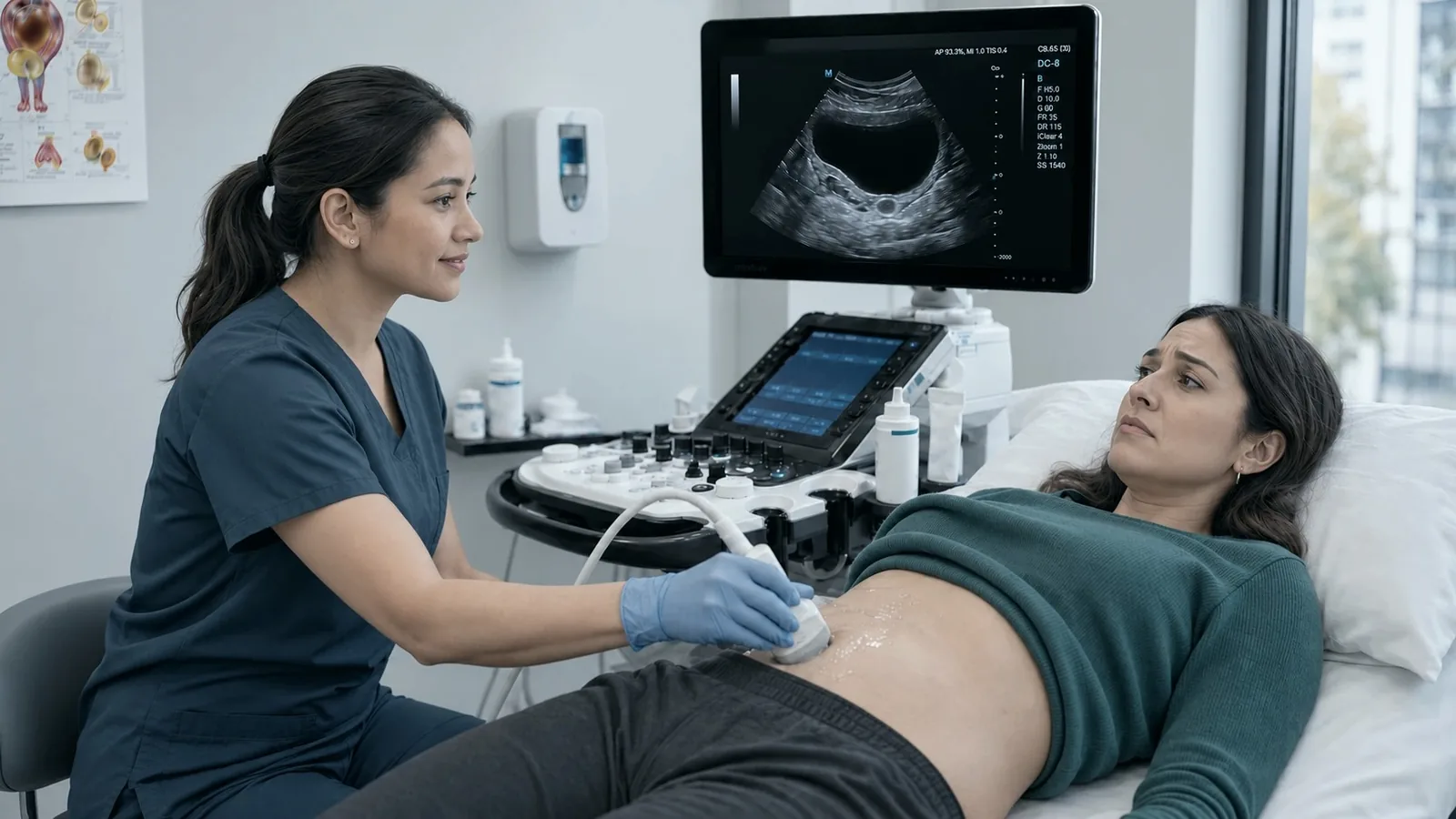 Conceptual image · AI-generated
A familiar starting point
You want to give your patients better care through ultrasound. What you need is a strong foundation and a clear system.
You've watched lectures, attended seminars, or learned by watching colleagues. Maybe there's a machine in your clinic you use with less certainty than you'd like. Maybe you practise far from a radiologist, and the formal report takes days. But the pieces still don't quite connect.
 Conceptual image · AI-generated
The problem usually isn't your ability. It's the absence of a structured way to learn.
The SonoMedica approach
A method you can follow.
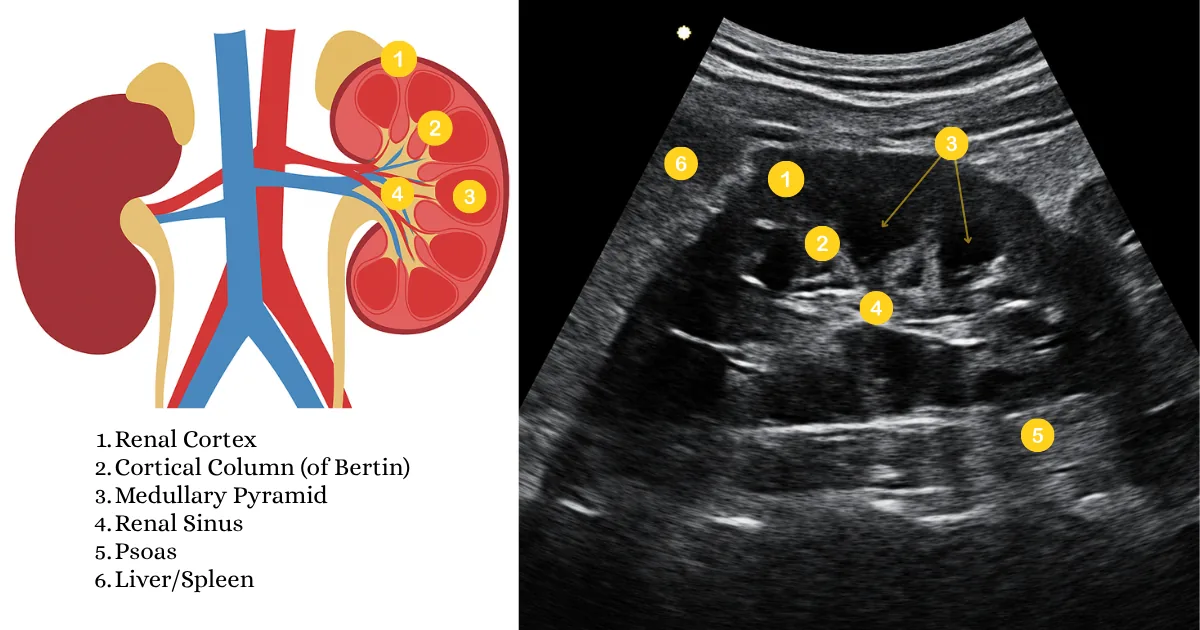
GUF teaches every examination through the same six stages, in the order a radiologist builds a reliable exam. The guiding principle is landmarks before labels: find where you are before you name what you see. Normal anatomy comes first, then the common abnormal patterns you are most likely to meet in practice.
Orient
Before the image, understand the anatomy: machine and patient setup, probe orientation, anatomical landmarks.
Optimize
Adjust the image until it is good enough to judge: transducer choice, depth, gain and focus.
Acquire
Obtain the standard views of each examination in a consistent order.
Recognize
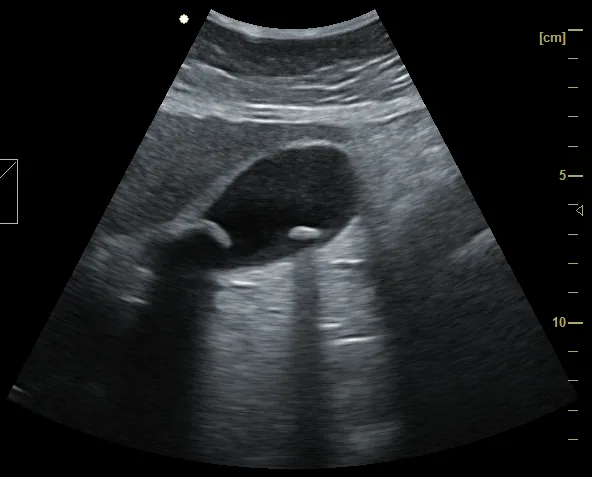
Tell normal from abnormal, and identify the common sonographic patterns of disease.
Document
Save representative and abnormal images, measure where needed, and describe findings in clear, consistent terms.
Escalate
Know when a finding needs further evaluation, physician review or referral, and act on it.
 Conceptual image · AI-generated
In our end-of-course feedback, every learner named recognizing anatomical landmarks as one of the areas the course improved most, and most also named recognizing common sonographic patterns and documenting findings.
What changes for you
More clarity.
More consistency.
Scattered → sequenced
Concepts and scanning workflows introduced in a deliberate order.
Recognition → method
Anatomy connected to probe movement, standard views and documentation.
Uncertainty → clearer limits
A more explicit understanding of when a scan needs further review.
A stronger foundation to build on through continued practice and professional development.
What the course covers
Nine areas of general ultrasound, in a deliberate order.
Core Foundations
Ultrasound physics and instrumentation, knobology and image optimization, imaging modes (B-mode, M-mode, colour Doppler); professional practice, ethics and patient safety (ALARA, consent, infection control)
Upper Abdomen
Liver, gallbladder and biliary tree, pancreas, spleen
KUB, Prostate and Right Lower Quadrant
Kidneys, ureters (when dilated or abnormal) and urinary bladder, transabdominal prostate, focused right-lower-quadrant and appendix evaluation
Abdominal Workflow
Bringing the abdominal organs together into one complete, systematic examination
Female Pelvis
Transabdominal pelvic ultrasound: uterus and adnexa, non-pregnant patient
Breast
Breast composition, systematic scanning technique, pattern recognition
Small Parts I
Thyroid and neck, testis and scrotum, inguinal region
Small Parts II
Superficial soft tissue and lymph nodes
FAST
Focused Assessment with Sonography for Trauma
Each module covers normal anatomy and the common abnormal patterns seen in everyday practice. GUF does not cover obstetric (pregnancy) ultrasound.
How it works
Built around a working professional's week.
Two fixed evenings a week, a clear start date, and the anatomy reviewed on your own time through short videos. If a class clashes with your duty, a replay lets you catch up.
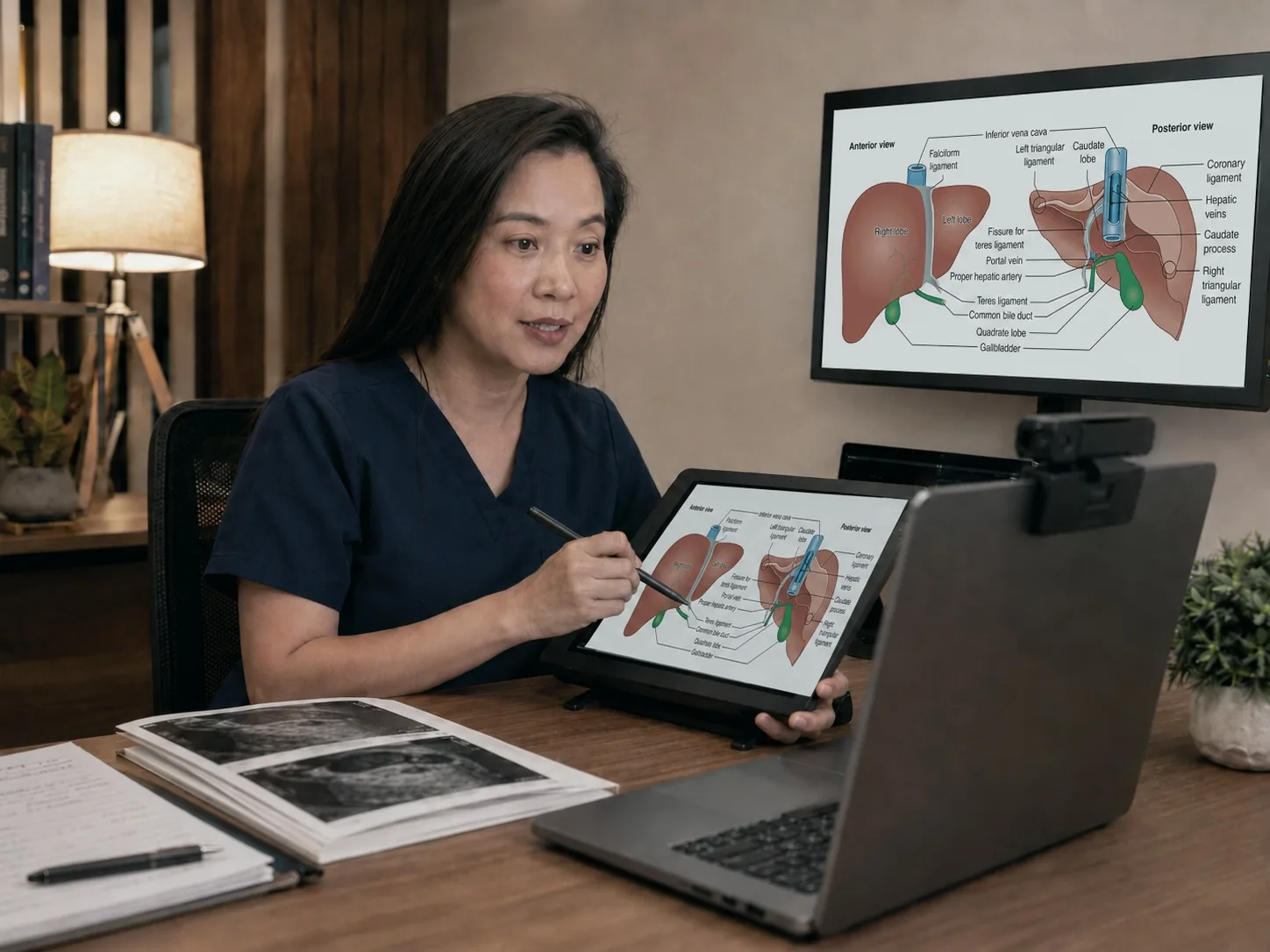
The detailed class schedule is sent when you enroll.
Who it's for
Is this course right for you?
A good fit if you:
- Are a physician who wants to integrate ultrasound into your own practice: general practice, emergency, family medicine, rural or municipal health
- Practise in a different specialty but are now expected to understand ultrasound beyond your own field
- Are a radiologic technologist, nurse or other healthcare professional who works where ultrasound is done and wants to understand it properly
- Are a medical or allied health student who wants a structured head start in ultrasound
- Are new to ultrasound, preparing for an ultrasound role, or already scanning and want to review or rebuild on a proper foundation
- Can commit to two evenings a week for six teaching weeks
Not for you if you:
- Need a hands-on scanning workshop. GUF is taught online.
- Want obstetric (pregnancy) ultrasound
- Expect a certificate that authorizes independent ultrasound practice
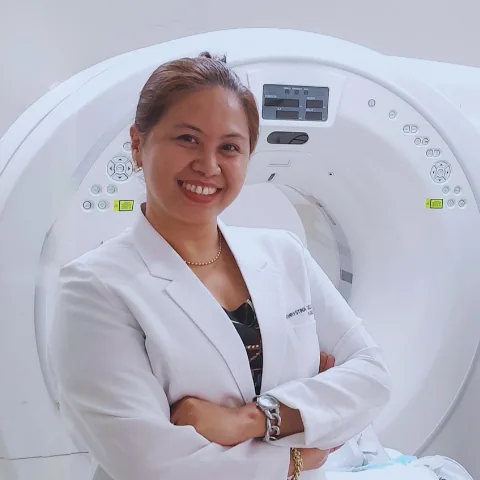
Founder · Program Director
Developed by a radiologist.
Dr. Khrystina Cielo G. Mabutin, DPBR
- Radiologist and sonologist; Diplomate, Philippine Board of Radiology
- Doctor of Medicine, University of Santo Tomas
- BS Medical Technology, University of Santo Tomas; Registered Medical Technologist
- More than 15 years in medicine; more than 12 years in radiology
- Former Municipal Health Officer / Rural Health Physician in a geographically isolated and disadvantaged area (GIDA)
- Former Philippine Air Force medical officer and flight surgeon
- Founder, SonoMedica Training and Development Services
For years I watched patients travel for hours, by boat, bus or motorcycle, for an ultrasound that often took only fifteen to twenty minutes. I planned to open ultrasound clinics closer to them. Then I found the harder problem: there weren't enough healthcare professionals trained to scan confidently and consistently.
So I started with education. GUF teaches ultrasound the way I wish it had been taught to everyone, including me: in a structured order, grounded in international standards, and adapted to how we actually practise here, including in rural communities.
— Dr. KC Mabutin
What our learners said
From our last cohort.
"I have already been able to apply a lot of my learnings in the sonography I do now."
"It is very useful for ObGyn ultrasound specialists to know basic general ultrasound."
"I found the class very helpful as a working professional… in between classes I can apply the techniques we learned."
"The instructor was also very good at explaining the topics in a simple and understandable way, which made the learning experience enjoyable and helped me gain more confidence."
Enrollment
10 seats this batch. Enrollment closes November 20.
This batch accepts 10 learners, so every case discussion has room for your questions. Enrollment closes on Friday, November 20, 2026, or earlier if all seats are taken.
Seats are non-refundable, but you may defer once to the next batch.
- 1Message us on Messenger.
- 2We send you the fees, payment options, class schedule and Student Handbook.
- 3Reserve your seat with a reservation payment, applied to your tuition.
- 4Settle the full tuition by November 20 and complete your enrollment forms.
FAQ · Frequently asked questions
A clearer picture, before you begin.
How is the course delivered?
Online. You join live classes and case discussions on Zoom twice a week in the evening, and watch short on-demand videos, such as anatomy reviews, on your own time.
Is this a hands-on course?
No. GUF teaches the knowledge and method behind each examination. It makes your own scanning practice more productive; it does not replace hands-on practice.
Do I need my own ultrasound machine?
No, you don't need your own machine to learn during the course. If you have access to one, you're encouraged to practise what you learn between classes.
I'm busy. What if I miss a class?
Classes run on a fixed schedule, twice a week in the evening, so you can plan around them. If you miss one, you get replay access. We still encourage you to attend live whenever you can, so you can ask questions and clarify anything you're unsure of.
Do I need prior ultrasound experience?
No. The course starts from the basics: physics, instrumentation and knobology, then anatomy and landmarks. Learners who were new to ultrasound told us the step-by-step order helped them most.
Will I be able to practise ultrasound independently after the course?
GUF is a foundation course, not a competency or credentialing program. It teaches you how to approach, perform and document the core examinations in a structured way. How you apply ultrasound depends on your profession, your institution's policies and applicable professional regulations.
Does it cover obstetric ultrasound?
No. GUF covers the non-pregnant female pelvis only. Message us if you'd like to hear about future programs.
Who can enroll?
Healthcare professionals, and medical or allied health students. If you're unsure whether the course fits your role, message us before enrolling.
Does this course carry CPD units?
No. SonoMedica is a PRC-accredited CPD provider, but General Ultrasound Foundations is not offered as a CPD program.
What do I receive at the end?
A Certificate of Completion when you meet the course requirements.
How much is the course?
Message us and we'll send the fees, payment options and schedule together, so you have everything in one place.
Can I get a refund?
Seats are non-refundable because this batch is limited to 10 learners. You may defer once to the next batch.
What do I need to join?
A laptop or tablet and a stable internet connection.
Your next step
Start with the foundation.
10 seats this batch. Classes begin the week of November 23. Enrollment closes November 20. Send us a message and we'll reply with the fees, the schedule and the Student Handbook.
 Conceptual image · AI-generated